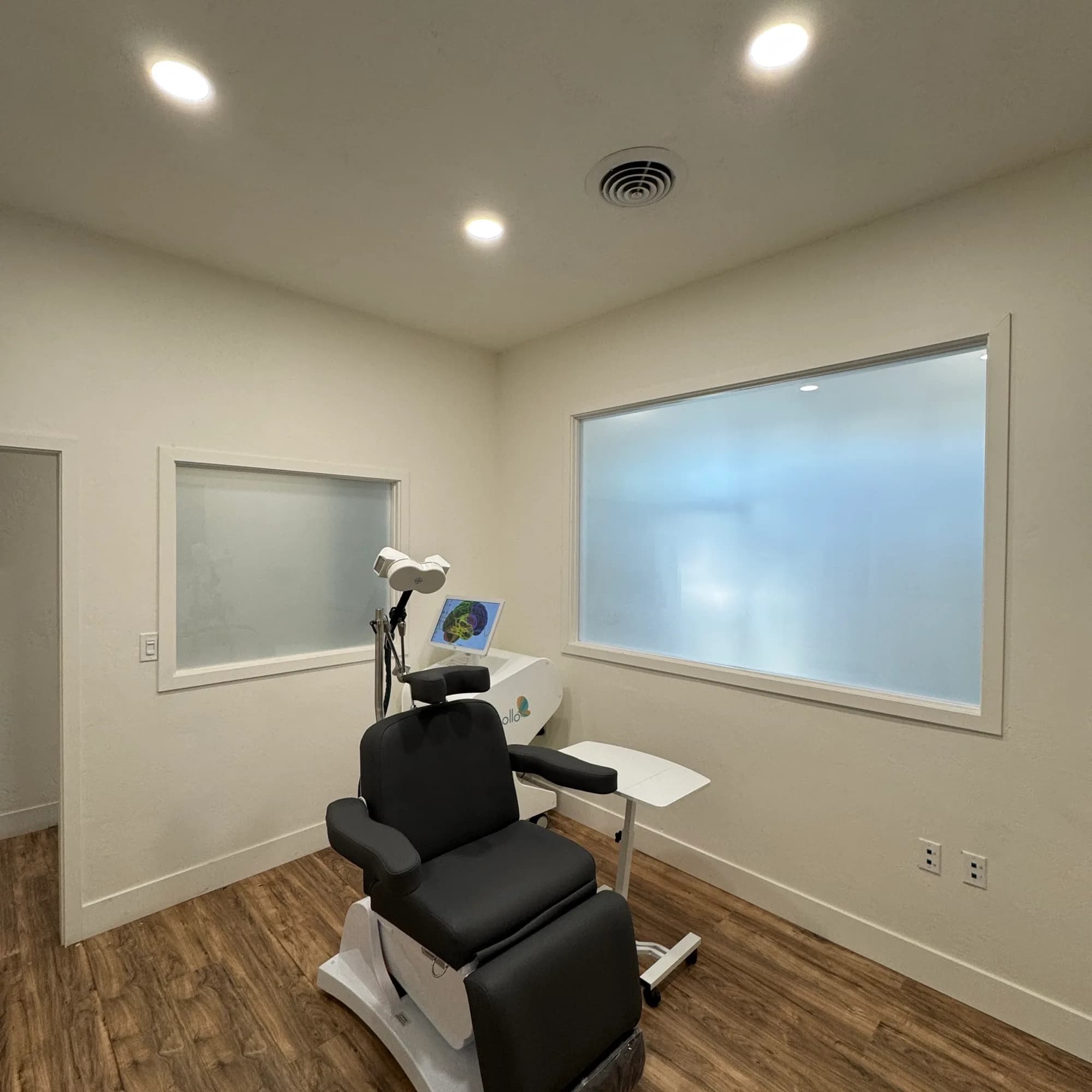
A behavioral health clinic in Atwater, CA had the problem clear glass creates and nothing else fixes. The treatment room has interior windows, glass between the room and the space next to it. That glass is there for good reasons: borrowed daylight, and a sightline so staff are not walking into a closed box. As clear glass, that same window puts the person in the chair on display to anyone passing by. In behavioral health, privacy in a treatment room is not a preference. It is a condition of doing the work.
The usual alternatives are worse than they sound. You can pull the glass and replace it with obscure glazing, which means a glazing contractor, demolition around the opening, and a treatment room out of service while it happens. Or you can hang blinds. Blinds collect ag dust here, they bend, they get pulled on, and they have to be cleaned in a room where cleanliness is part of the job.
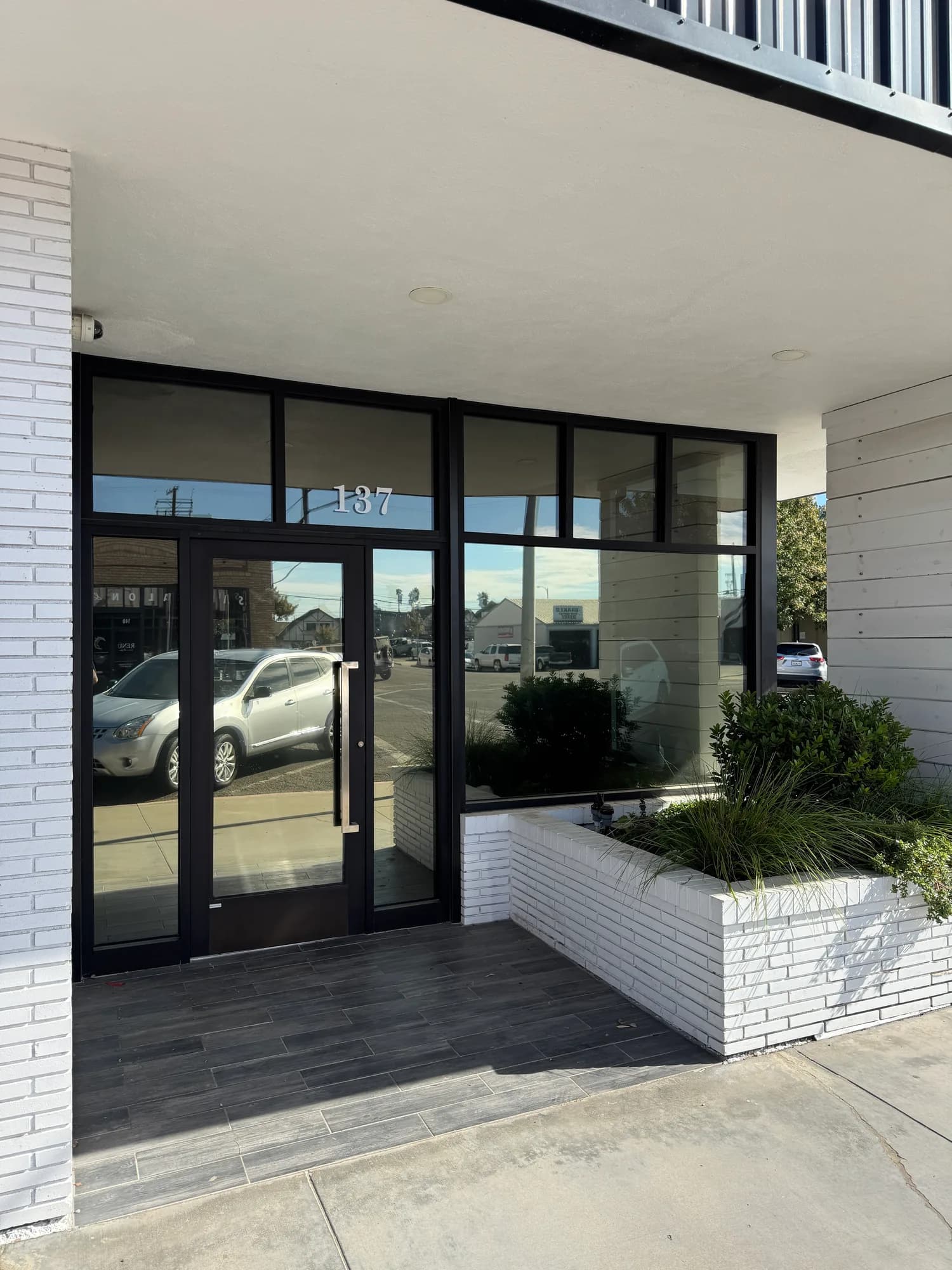
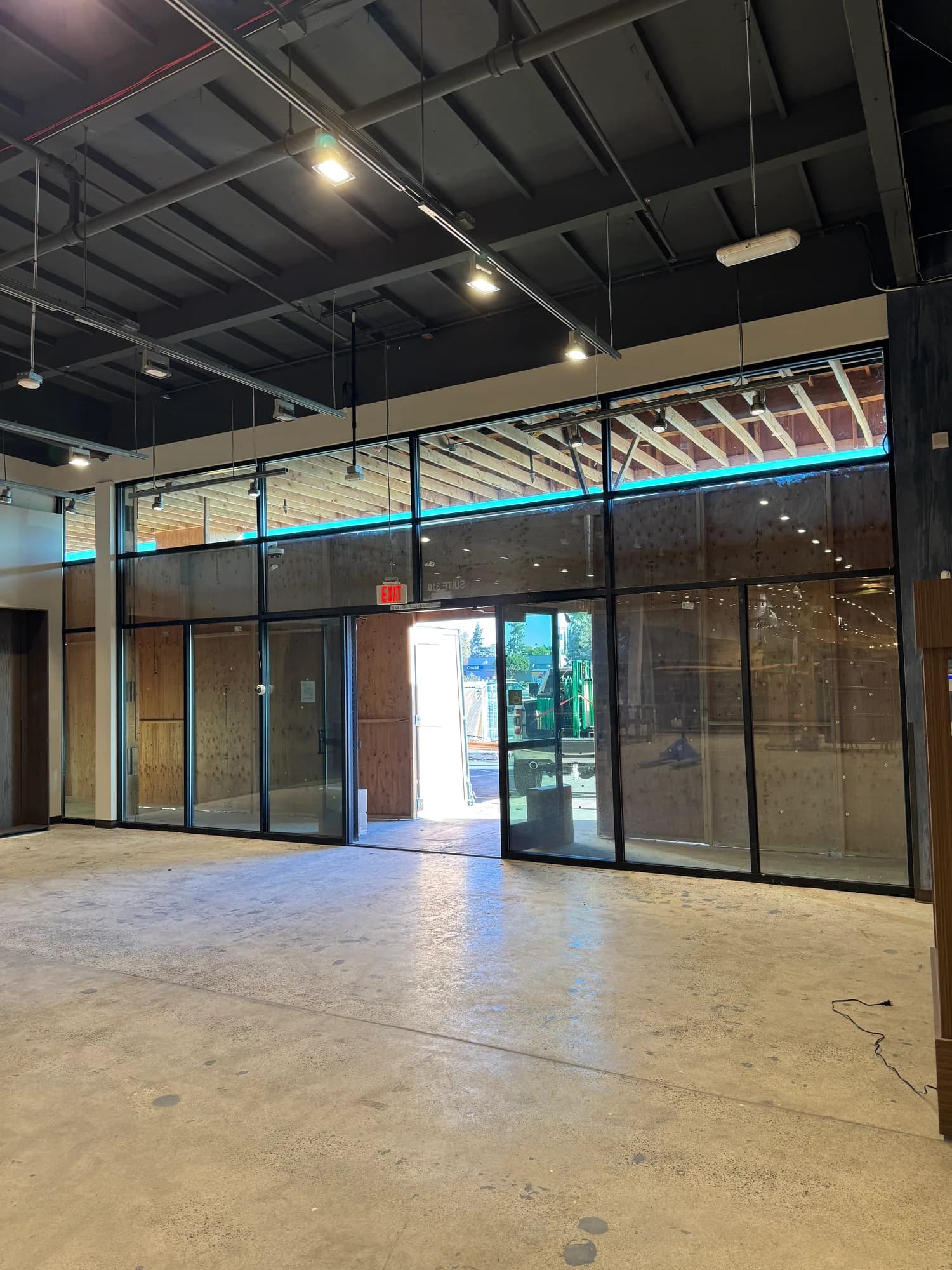
The front of the building had its own version of the same problem. It is a clean remodel: white painted brick pilasters, white horizontal wood-look siding, black-framed storefront glass with transom lites, and a glass entry door with a long vertical pull. All of it faces a parking lot and the street past it. Anyone sitting in the waiting area was visible to anyone pulling into a space. And a wall of storefront glass in Merced County takes the sun and hands the heat and glare straight through to whoever sits behind it.